On 22 July, 1962, NASA’s Mariner 1 spacecraft lifted off from Cape Canaveral, FL, set to complete humanity’s very first interplanetary flyby of Venus. The Atlas-Agena rocket climbed perfectly into the clear Florida sky for exactly 293 seconds, when it began to veer erratically off course.
Entirely unresponsive to tracking correction vectors and heading directly for commercial shipping lanes, the range safety officer was forced to press the destruct button. And in a moment, the rocket – and its cutting-edge exploratory payload – dissolved into a raincloud of debris over the Atlantic Ocean.
The post-incident investigation team spent days combing through handwritten equations and punch-card configurations to find out what hardware component had failed. But nothing was wrong with any of the system components. Instead, the failure that cost the entire mission – nearly $170 million in today’s dollar – was a single missing hyphen in the control code. That single omission made the ship’s steering code treat minor variations in velocity as massive, catastrophic course deviation; the guidance system overcorrected a non-existent problem and tore itself off its own trajectory.
This incident was later referred to as “the most expensive typo in history” and remains a cautionary tale of system risk management. And decades later, as manufacturing facilities race toward the digital transformation, industrial leaders are inadvertently baking their own cataclysmic typos into the code driving their automation systems.
The Scale of Modern Automation Codebase
Compared to today’s industrial automation systems, 1962’s spacecraft code wasn’t rocket science. Manufacturing facilities operate within a complex ecosystem of codebases that rival an aerospace program. A single building automation system relies on thousands of interconnected components, including:
- PLCs (programmable logic controllers) running execution loops measured in milliseconds.
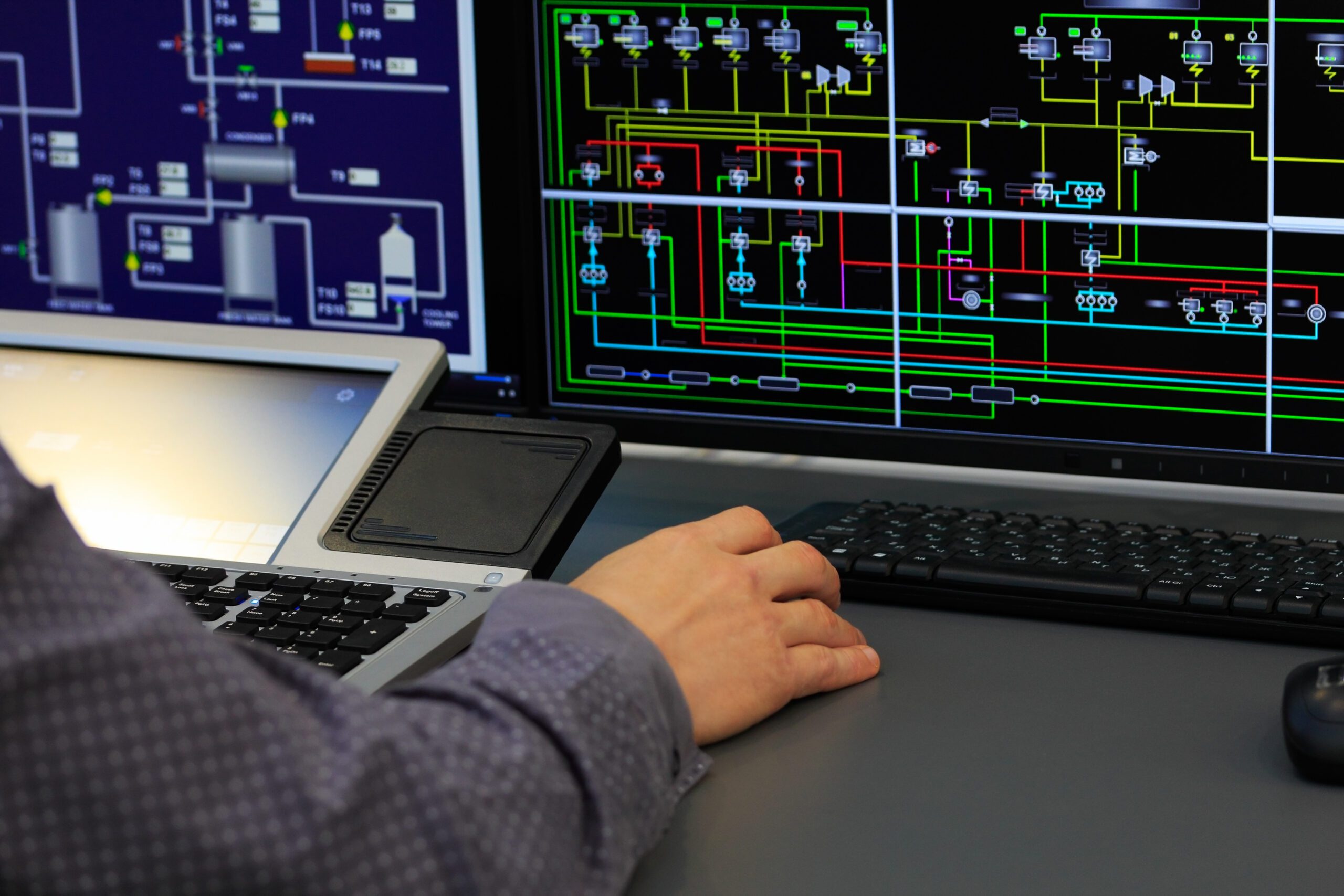
- HMIs (human-machine interfaces) visualizing system statuses, tag names, and dynamic process changes.
- SCADA (supervisory control and data acquisition) platforms handling distributed database tracking.
- MES (manufacturing execution systems) integrating mechanical equipment with ERP databases.
Each time an operation scales, retrofits an automated process, or migrates to a modern control system platform like those of AVEVA or Rockwell Automation, automation system integrators aren’t just building a system but weaving together a web of data tags, script triggers, and communication protocols. And the threat in all that intricacy is that a tiny, overlooked syntax anomaly buried within a newly-deployed component will remain dormant until an unusual edge-case triggers it, resulting in an unprompted, costly shutdown.
Why Copy-Paste Code is a Corporate-Level Risk
Production schedules are tight; a common shortcut in control system upgrades is to reuse legacy software logic from an older line and paste it into a new, higher-velocity deployment. This saves time but bypasses the critical step of any automation system retrofit: validation.
Another cautionary tale from the aerospace world occurred in 1996 with the maiden flight of the Ariane 5 rocket. Engineers had reused working guidance software from the Ariane 4, but because Ariane 5 was faster, it generated larger physical velocity numbers. The legacy software tried to cram a 64-bit floating point value into a 16-bit integer space, crashing the internal computer system and causing the rocket to self-destruct just 37 seconds after launch.
On the plant floor, this manifests when the operations team that scales an automated process – such as moving from a 500-gallon mixer to a 5000-gallon system – fails to rewrite the underlying controller logic. Under normal operations, the updated system seems fine, but the moment a sensor detects a sudden spike, an unvetted data type limit is exceeded, the controller locks up, an entire batch of raw material is lost, and now the team is facing downtime and an expensive troubleshooting and remediation process.
How to De-Risk the System Integration Process
To ensure an automation architecture is free of catastrophic syntax flaws, a systems integration services company cannot rely on the savvy of a single talented developer. True risk mitigation requires a rigid, repeatable, audited software engineering framework.
1. Unified Code Architecture (ISA-88 & ISA-95)
Enterprise-level systems integrators do not write custom code from scratch for every unique project. They rely on modular, object-oriented code structures governed by international standards like ISA-88 (for batch control) and ISA-95 (for enterprise-to-control integration). By structuring control system code into standardized, pre-tested building blocks, developers ensure that every data tag behaves exactly like the last, eliminating the human typos that occur when writing repetitive lines manually.
2. Comprehensive Code Documentation & Peer Review
Everyone has blind spots, and just as a publisher uses editors, an automation firm must enforce peer code reviews. Every PLC routine, SIS (safety instrumented system) interlock, and SCADA database script must be checked by a secondary control software engineer who did not write the original logic. Furthermore, the code must feature transparent, human-readable documentation so that the client’s internal maintenance engineers can easily read and diagnose the system ten years down the road.
3. Virtual Commissioning & Emulation
Before a single network cable is connected, the new control system should undergo virtual commissioning. Using simulation tools like digital twin technologies, engineers can build a functional virtual mirror of the plant’s physical environment. This allows testing of the software against extreme hypothetical scenarios – such as simulating sensor failures, network drops, and emergency stop triggers – safely inside a sandbox environment where the consequences of a find-and-fix don’t affect physical operations.
Precision is Not Optional in Modern Manufacturing Automation
The lessons from Mariner 1 and Ariane 5 are that in complex, highly-interconnected automation and controls, there is no such thing as a minor detail. A single missing character or legacy line of text can bring down the most advanced factory automation system and throw all the time and capital spent on the upgrade out the window.
When selecting an industrial automation system integrator, look to industry certifications like an enterprise CSIA (Control System Integrators Association) Certification. It confirms their project delivery, documentation practices, and testing methodologies are repeatedly rigorously audited by an independent third-party.
In automation, the margin between record uptime and unscheduled downtime comes down to the discipline behind the code. A proven automation partner combines rigorous software standards, peer review, testing, and lifecycle support to reduce risk while accelerating modernization.