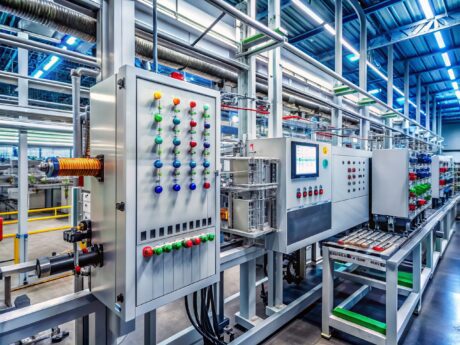
Industrial automation systems are becoming more connected, data-driven, and complex than ever before. Modern facilities rely on interconnected networks of PLCs, SCADA integration, historians, cloud analytics, sensors, and software applications to maintain safe and efficient operations across a closed system.
There’s a reason they call it an ecosystem.
As automation systems grow in sophistication, they also become more vulnerable to disruptions. Equipment failures, cyber incidents, communication outages, and unexpected operating conditions can all threaten production continuity and collapse operational integrity.
Natural systems have spent hundreds of millions of years evolving strategies that allow them to survive disruption, adapt to changing conditions, and continue functioning when individual components fail. From immune systems and threat detection to soil seed banks and redundant controls, biology offers valuable lessons for designing fault-tolerant control systems and ensure your operations escape extinction to continue on in the evolution of manufacturing.
Evolution Prioritizes Survival Over Efficiency
Many industrial systems are designed with efficiency as the primary objective. Engineers optimize processes to maximize throughput, minimize waste, and reduce operating costs. Nature often takes a different approach.
Biological systems are rarely optimized for maximum efficiency. Instead, they are optimized for survival. Living organisms maintain countless backup mechanisms for essential functions. Trees carry a wild amount of extra DNA they don’t use. Herbs keep soil seed banks in case of a disaster like drought or fire. This redundancy may appear inefficient, but it enables resilience.
Industrial facilities face a similar challenge. Automation systems that operate at maximum capacity under ideal conditions may struggle when disruptions occur. By designing automation architectures that prioritize operational resilience alongside efficiency, organizations gain the agility to withstand unexpected events.
Redundancy is Everywhere in Biology
One of the most obvious lessons from nature is the importance of redundancy. Humans have two kidneys but can easily function with only one if the other fails. Many biological functions can continue even when part of the system becomes damaged.
The same principle applies to industrial automation. Fault-tolerant facilities often implement:
- Redundant PLC processors
- Backup power systems
- Secondary communication networks
- Failover servers
- Duplicate instrumentation
If a critical component fails, another can immediately assume responsibility. We see this reflected in forest ecosystems, where several species serve the same function. If a blight wipes one out, there are others to fill the role and the system evades disruption.
However, nature tends to reserve redundancy for systems that are critical to survival. Likewise, automation teams should identify the assets and processes whose failure would create the greatest operational risk and focus control system design and integration accordingly.
Feedback Loops Are the Foundation of Stability
Nearly every process in biology or automation relies on feedback. The human body continuously regulates temperature, blood pressure, blood glucose concentrations, and countless other variables. Sensors detect changes, the body evaluates conditions, and corrective actions occur automatically.
Industrial control systems operate on the same principle. Sensors collect process information. Controllers compare measured process values against setpoints and execute corrective control logic to maintain stable operation. Corrective actions maintain stability. Whether managing reactor temperatures, tank levels, flow rates, or motor speeds, feedback loops form the foundation of modern automation.
The biological lesson is that effective feedback requires timely, accurate information. When sensors fail or data becomes unreliable, corrective actions become less effective. The most advanced control algorithm cannot compensate for poor data; IT/OT risk assessments ensure facilities aren’t relying on ineffective hardware.
Diversity Creates Resilience
Ecologists have long recognized that diverse ecosystems tend to be more resilient than ecosystems dominated by a single species; genetic and functional diversity strengthen the advantages of redundancy and feedback loops.
When environmental conditions change, biological diversity provides options and balances competition. By contrast, monocultures are highly vulnerable as all organisms rely on the same resource to survive.
Industrial operations face comparable risks, as single points of failure can exist in many forms:
- One critical server
- One communications pathway
- One specialized vendor
- One engineer with unique expertise
- One unsupported software platform
When organizations become overly dependent on a single resource, disruptions become more likely. Building diversity into automation architectures, supplier relationships, and workforce development strategies can improve long-term resilience. Brand-agnostic and vendor-agnostic control system integration and modernization projects leverage technological diversity to customize system design and increase fault tolerance.
Decentralization Improves Adaptability
Many biological systems operate without a single centralized controller. Consider an ant colony – no individual ant manages the entire colony, yet the colony can gather resources, defend itself, adapt to changing conditions, and solve complex problems.
These decentralized systems are remarkably resilient because they do not depend on a single point of control. Industrial automation is increasingly moving in a similar direction; distributed control systems (DCS), edge computing platforms, intelligent field devices, and autonomous subsystems all enable localized decision-making closer to the process itself.
If communications are interrupted or centralized resources become unavailable, decentralized systems can often continue operating. As industrial operations become more complex, decentralization may play an increasingly important role in maintaining operational continuity as well as enhancing ICS cybersecurity.
Adaptation Often Matters More than Optimization
Biological systems rarely encounter stable environments. Organisms face changing climates, evolving predators, shifting food sources, and countless other pressures. Their long-term success depends on adaptability.
Industrial facilities face similar uncertainty. Market demands change. Regulations evolve. Product lines expand. Supply chains fluctuate. New technologies emerge. Automation systems designed exclusively around current requirements may become constraints in the future.
This is why scalable architectures, modular designs, and flexible software platforms are increasingly valuable. Organizations that prioritize adaptability can respond more effectively to changing market conditions. In many cases, a system that is slightly less optimized today may provide greater value over its lifecycle because it can evolve with operational needs.
Adaptability keeps systems prepared for both the unexpected and the inevitable.
Nature Uses Boundaries to Contain Cascading Failures
Healthy biological systems are highly interconnected; immune systems continuously monitor internal conditions to detect problems early – but they also maintain boundaries. Immune-competent cells detect an intruder, alert the system of threats, and isolate them where possible.
Similarly, organs perform specialized functions. If your appendix fails, the rest of the system continues operating; you just need to triage the component that failed. These boundaries help identify and prevent localized problems from spreading throughout the entire organism.
Industrial facilities face a similar challenge. Integrated IT/OT automation systems provide operational benefits, but excessive connectivity can increase risk without multiple containment measures. A network failure, cybersecurity incident, or software error that spreads across an entire facility can create significant disruptions.
This is why modern automation architectures increasingly emphasize:
- Network segmentation
- Security zones
- Layered defenses
- System compartmentalization
- Access controls
Effective fault tolerance is not only about connectivity – it’s also about containment.
Automation System Design Needs a Touch of Nature
As industrial operations continue to digitize, fault tolerance will become increasingly important. Facilities can no longer rely solely on preventing failures; they must design systems capable of functioning despite failures. Nature provides a salient framework for achieving this goal.
Biological systems survive because they incorporate redundancy, feedback, diversity, adaptability, decentralization, early threat detection, and compartmentalization. These same principles can help industrial organizations build more resilient automation systems. The future of industrial automation is not only about creating faster or more efficient systems. It is about creating systems that can continue operating safely and effectively when conditions are less than ideal. In that sense, some of the most valuable lessons for modern control engineering may have been evolving in nature for a few hundred million years.