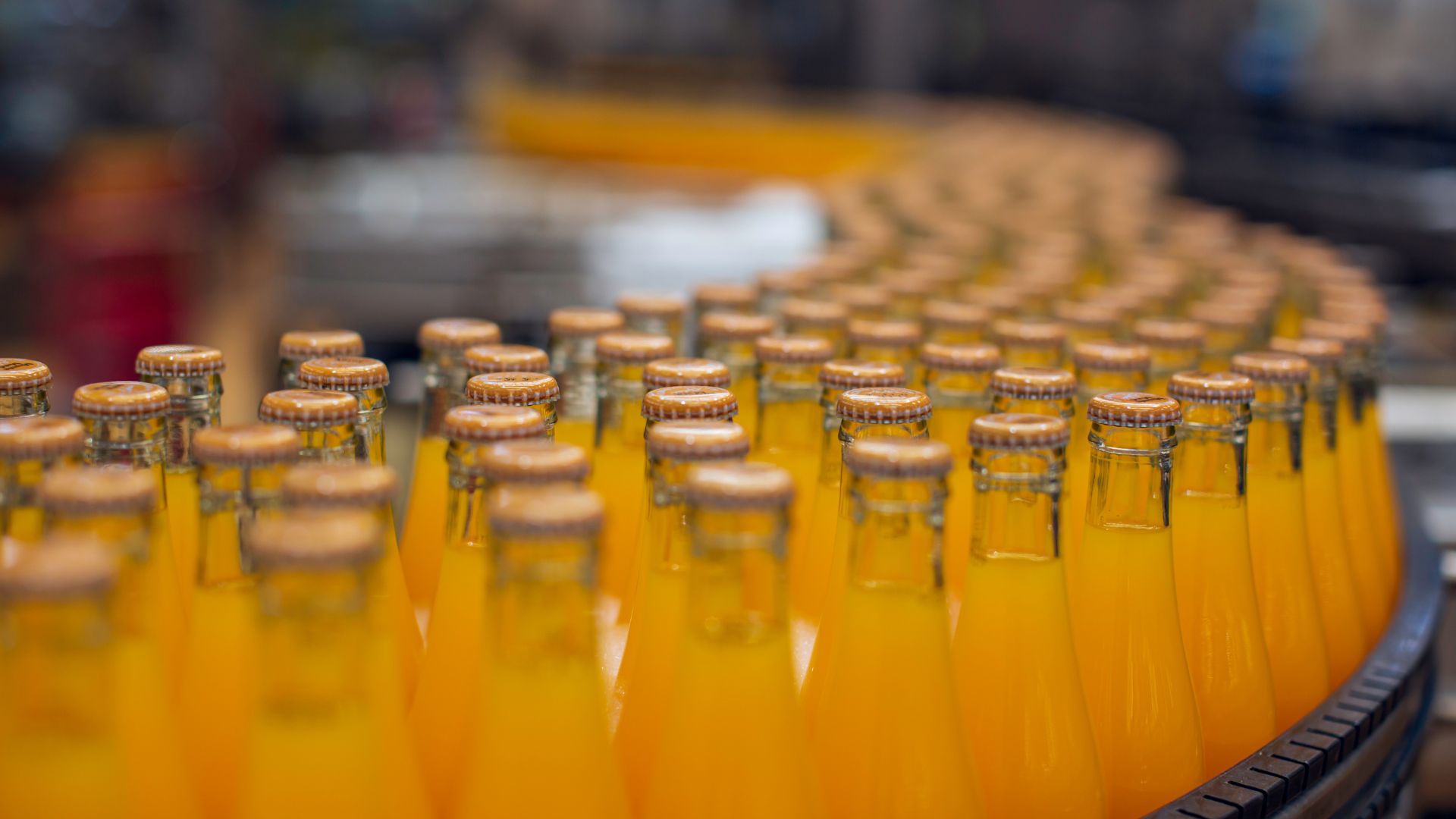
At first glance, a commercial brewery crafting thousands of barrels of beer each week doesn’t appear to have much in common with a biopharma facility culturing monoclonal antibodies. The brewery operates in a high-volume, cost-sensitive market where profits hinge on throughput and brand consistency while the biotech facility operates under stringent compliance standards where batch failure carries multi-million dollar consequences.
But if you look closer at the physical fluid systems both operations use, the distinction blurs. Both center on liquid processing in stainless steel vessels, pump skids, and valve manifolds, and both rely on living biological agents. Most importantly, both environments are entirely dependent on what happens between production runs: Clean-in-Place (CIP) operations.
CIP systems represent one of the most critical yet overlooked operational stages of industrial processing, especially in these food, beverage, and pharmaceutical markets. Whether clearing residual organic matter from a fermentation vessel or eliminating cross-contamination risk between bioprocessing runs, CIP is where efficiency, compliance, and energy usage intersect.
By taking a look at how these seemingly disparate sectors approach automated sanitation control systems, engineers and facility leaders can unlock significant operational improvements.
The TACT Principles Behind Effective CIP Performance
Industrial cleaning systems automate circulation of cleaning solutions, rinses, and sanitizers via closed process equipment without requiring manual disassembly. The effectiveness of any CIP cycle relies on four dynamic variables often referred to as the TACT principles:
- [T]ime: The duration the cleaning agent remains in contact with process surfaces.
- [A]ction: The mechanical shear stress generated by fluid velocity, turbulence, or spray impact.
- [C]hemical Concentration: The strength, nature, and stability of the cleaning agent.
- [T]emperature: The thermal energy applied to accelerate chemical reactions and breakdown of residues.
Ideally, these variables exist in a balanced state; if chemical concentration is diluted to save costs, thermal energy and/or contact time must increase to achieve the same removal of microflora or sediments. In reality, though, many facilities rely on fixed, worst-case timer loops designed decades ago. Plant managers often prioritize contamination prevention above all else routinely apply static safety margins that over-ensure cleanliness.
This might look like running caustic flushes 15 minutes longer than necessary or maintaining unnecessarily conservative temperature profiles. These measures prevent the regulatory, product, financial, and reputational consequences of contamination, but at a massive operational cost in energy, chemical inventory, water consumption, and lost production time.
A Tale of Two Automation Frameworks: Margins vs. Compliance
Understanding the differences between automation for food and beverage vs pharmaceutical CIP systems highlights where each sector excels and where each can adopt lessons from the other:
Food & Beverage CIP Controls: Volume & Utility Efficiency
In large-scale brewing and similar operations such as dairy processing, CIP represents a primary sink for utilities. Heating water, purchasing bulk chemicals, treating industrial wastewater, and burning natural gas for steam generation directly eat into already thin operating margins.
As a result, automation strategies for food and beverage CIP focus heavily on utility recovery and cycle time reduction. Advanced food processing plants utilize multi-tank CIP skids that recover final rinse water for use as the initial burst wash in the next cycle, or re-concentrate caustic solutions instead of sending them to neutralizer pits.
The primary CIP struggle for most food and beverage operations is process drift. Manual overrides, uncalibrated flow switches, and undocumented operator tweaks can create variance, slowly degrading control system efficiency.
Life Sciences CIP Automation: Validation & Data Integrity
In biopharma and biotech automation, risk mitigation and regulatory compliance are prioritized above all; utility costs are a secondary concern. Facilities governed by FDA 21 CFR Part 11 and ISA-88 (S88) batch standards must prove that every inch of pipe, valve, body, and vessel wall achieved verified cleaning conditions. In pharmaceutical automation architectures, CIP is not a support utility but a validated process step.
Control system frameworks for life sciences CIP emphasize total data integrity, audit trails, and strict recipe management. A cycle doesn’t simply run for a fixed time; it has to prove via continuous sensor telemetry that precise pressure, flow, temperature, and chemical concentration thresholds were met simultaneously across all return loops.
The primary CIP struggle for most life sciences operations is rigidity. Because modifying a validated automation sequence requires extensive documentation and change control, facilities often remain locked into inefficient, legacy CIP profiles long after improved automation technologies become available simply because the current CIP system is a sure thing – the risk of a control system upgrade outweighs the benefits of better system efficiency.
Cross-Sector Control Solutions: Transitioning from Static Routines to Dynamic Systems
The path forward for both high-volume consumer manufacturing and high-fidelity bioprocessing lies in combining the best elements of each: adopting the rigorous data architectures of life sciences CIP alongside the agile, utility-conscious optimizations of food and beverage systems.
1. Transition from Time-Based to Condition-Based Cleaning
- Conductivity Feedback: Rather than running a final rinse for a pre-programmed 20 minutes, conductivity on the CIP return line continuously measures ionic concentration. The exact second the chemical traces fall below set thresholds, the control system automatically terminates the rinse.
- Turbidity and Optical Monitoring: In beverage operations, inline turbidity meters detect the transition between water, product residue, and cleaning solutions in real time. This allows for precise valve switching, which prevents product dilution and maximizes chemical recovery.
- Flow Velocity Verification: Mechanical action depends on fluid turbulence, typically maintaining a minimum fluid velocity of 5 ft/sec through process piping. Utilizing magnetic flowmeters tied to VFDs ensures adequate turbulence without wasting energy maintaining excessive flow rates.
2. Standardize Architecture with ISA-88 Batch Control
- Procedural Elements: Defining CIP operations as modular routines (e.g., pre-rinse, caustic wash).
- Recipe Parameters: Allowing process engineers to adjust target parameters (e.g., temperature setpoints, concentration limits) per product type without rewriting the underlying control system code.
- Equipment Entities: Decoupling physical CIP skids from target process vessels, enabling dynamic routing and multi-vessel CIP scheduling.
By structuring CIP routines under S88 batch control standards, facilities build repeatable, auditable operations that ensure operational consistency.
The ROI of Smart CIP Control
Modern CIP optimization projects also create a foundation for improved reporting, manufacturing intelligence, utility monitoring, and future AI-enabled process improvement initiatives.
Upgrading CIP automation provides tangible operational benefits across sectors:
- Water Consumption: Over-allocated safety margins are replaced with real-time conductivity that shuts off valves upon cleanliness.
- Cycle Duration: Fixed worst-case step times are replaced with parameter-based step advancement.
- Energy Consumption: Continuous high-temperature loops on fixed timers are replaced with dynamic heat modulation based on return temperature telemetry.
- Compliance & Risk: Manual logs or strip charts are replaced with fully-automated, tamper-proof digital batch records.
Unlock Capacity Without Capital Expansion with Smart CIP
In capital-intensive processing industries, scaling throughput typically implies adding physical equipment. However, modernizing CIP systems demonstrates significant capacity can be gained without adding physical assets. If automated sensor verification reduces CIP times by just 5 or 10 minutes, plants recover hundreds of hours of production capacity annually without a single new processing vessel.
Whether producing a hazy IPA or a life-saving vaccine, CIP principles remain identical: control systems that treat cleaning as a precise, data-driven science rather than a static routine yield safer products, lower operational costs, and higher throughput.