Skip to content

News & Knowledge

We’re your source for automation news. Keep up with the latest industry updates and E Tech employee spotlights, as well as tips and guidance from our manufacturing experts.  

Data Analysis Disruptors in the Industrial Space

Adapt past the disruptors to realize benefits from industrial data analytics. Vice President of Business Development, Laurie Cavanaugh, shared her insight and experience with Control Engineering for a webcast last spring in this partial transcript from the April 21, 2022, RCEP PDH webcast. Emerging Trends in Industrial Data Analysis Industrial data analysis is evolving rapidly, driven by advances in connectivity, AI, and machine learning. Modern manufacturing facilities are increasingly relying on real-time insights to optimize production, reduce waste, and improve production quality. That means that understanding analytics trends can help companies stay ahead of competitors and achieve measurable operational gains. The Source of Key Disruptors Shaping Industrial Analytics Several factors are fundamentally changing how manufacturers approach data analysis: Just as each of these creates new opportunities for manufacturers, it also introduces disruptors that can prevent progress. That doesn’t mean we should avoid progress — but it does shape what adapting to new technologies looks like. Disruptors Can Slow Industrial Data Analysis Adoption The industrial data analytics course title says “Just Enough,” but what is enough? Sometimes, enough isn’t good enough because of some of the disruptors to industrial automation. Back in the late ‘90s and the early aughts, it was difficult for those trying to sell computers into the industrial automation space. The user adoption just wasn’t there. People were afraid of technology. They didn’t have a computer in their home at that point, or were just getting into that. Fear of the unknown prevented full forward movement of the industrial automation space. There were generational barriers, but in just a 10-year timespan from the late aughts until mid-2010s, what really disrupted that? What started changing the minds of end users in the industrial space? It was what they were doing outside of work. All of a sudden, users are … Continued

Read More

Robotic and Palletizing Automation Solutions by E Tech Group

Below, you can take a visual tour of a complete upgrade to a palletizing and sorting conveyor, including a simulation of the complete solution, and a step-by-step breakdown of each facet of this robotic automation project. See Robotic Automation in Action E Tech Group delivers robotic and end-of-line automation systems that increase throughput, reduce labor strain, and improve consistency. From palletizing to pick-and-place, our solutions are engineered for performance and built for scalability. Below, you’ll find real-world video examples of robotics and palletizing systems we’ve implemented across manufacturing environments. Robotic and End-of-Line Automation Systems Simulation of an Automated End-of-Line Palletizing and AGV Solution The client came to us for help automating this process which was nearly 100% manual. The sortation conveyor you’ll see delivering boxes to each lane in this simulation and subsequent videos was the only existing automation. After that boxes were stacked manually on wooden pallets and all pallet handling was 100% manual as well. Manual pallet handling was this client’s #1 cause of recordable accidents. The above simulation was used as a proof of concept to look at various production rates to ensure that we would not encounter any constraints or collisions and to ensure proper operation prior to final design and build. Post project, this same model could be enhanced and used as a digital twin for training, real-time troubleshooting, and new product simulation purposes Infeed Singulator & Sortation Conveyor This video shows the robotics that sort cases to be sent to palletizing. The infeed sortation conveyors deliver completed cases to the appropriate palletizing lane to be palletized by the robotic cells.  This is accomplished using bar code scanners that identify the product code (SKU) and then automatically route the box to the correct lane. Dual Palletizing Cell This video shows a palletizing cell designed to … Continued

Read More

Best Practices for Effective Automation Applications

E Tech Group Lead Automation Engineer, Kevin Tom shares his knowledge and expertise on the Best Practices for Effective Automation Applications in a three-part series featured on Control Engineering. No matter the automation technologies being considered or implemented, universal rules apply; a significant portion includes collecting the right information for the automation project. Whether just starting or a seasoned expert, heed this advice when applying automation. Automation can do quite a bit, but do not over-reach automation’s capabilities. Automation cannot cure overly complex operations. Get the right design first, then apply the right automation. Real-world examples will help fill skills gaps with smart manufacturing. Explore Kevin’s three-part discussion on system integrators’ role in improving automation applications. What’s Inside? Automation SparkNotes: Part 1: Automation effectiveness through data collection Part 2: Automation case study Part 3: Automation Q&A session Part 1: Automation Effectiveness Through Data Collection Part 1 covers automation as a data-driven process built on collaboration. Multiple points of view are necessary to understand what needs to be accomplished, what’s expected, and how to get there. But opinions aren’t the way to make decisions. Data is. Recommendations for best practices include a full rundown of E Tech Group’s process of collecting data for initial project design, including personnel interviews, IT/OT risk assessments, equipment mapping, and pulling in every relevant department for input. The more data there is to collect, the more an opinion becomes an authoritative consideration. Specifically, a 5-step process for uncovering candidates for automation application is proposed: Part 2. Automation Case Study Part 2 covers a case study in applying automation at a pharmaceutical pilot plant, where a control system integrator had to modify a control system in the field to remedy a blind spot in the original process. It details the complex project and how E Tech Group’s automation … Continued

Read More

When Dealing with Obsolescence Becomes a Challenge

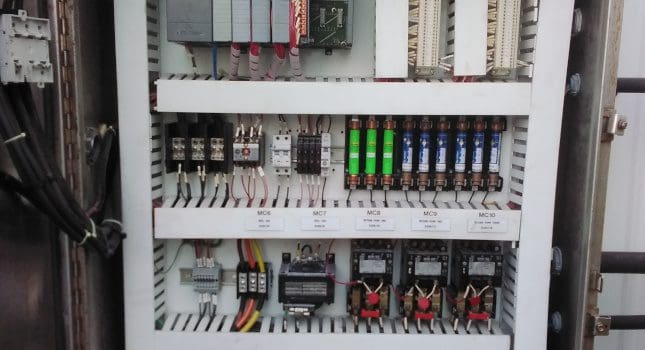
E Tech Group’s Group Engineering Manager, George Bruce, shares his insight into leading an extensive system upgrade over a weekend. A system integrator upgraded a decades-old obsolete system to a current high-speed system over a weekend. Avoiding Obsolescence: Insights on E Tech Group’s Process: Key Challenges of Obsolete Systems Decades-old control systems often come with a host of challenges that can disrupt operations and limit growth. Slower processing speeds, unsupported hardware, and outdated software increase the risk of unplanned downtime and make routine maintenance more difficult. These issues not only compromise productivity but also create barriers to scaling operations or integrating new technologies. Understanding these risks helps manufacturers prioritize upgrades and plan transitions with minimal disruption to production. Automation & Control System Needs Upgrading, No Downtime Allowed E Tech Group automation engineers were contracted to update and replace obsolete hardware in a pickle plant. They knew that if the one centralized PLC-5 that controlled five systems responsible for over 50% of pickle production failed, they would be shutting down the entire plant to identify and fix the issue, leading the company to lose valuable time and revenue during peak production periods.  To upgrade and separate the equipment, the five systems controlled by the central programmable logic controller (PLC) would need to be migrated and have all communication transitioned to Ethernet. A Piecemeal Automation System, Time Constraints & Michigan Weather Because there were a number of hurdles to take into consideration when beginning this upgrade, it took careful planning to ensure this project could be completed without disrupting production or extending the deadline. First, the team mapped three decades of piecemeal, undocumented upgrades to plan a safe cutover from a central PLC-5 to segmented ControlLogix/CompactLogix cells over Ethernet. Second, understanding the facility used only fresh produce, and at certain times ran … Continued

Read More