Skip to content

News & Knowledge

We’re your source for automation news. Keep up with the latest industry updates and E Tech employee spotlights, as well as tips and guidance from our manufacturing experts.  

Podcast: The changing role of control system integrators in the automation industry

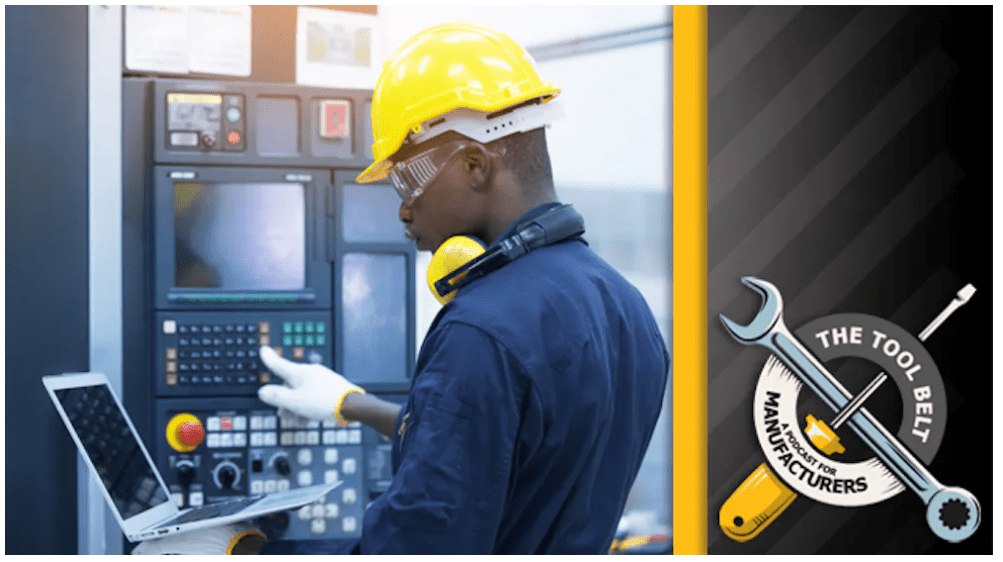
E Tech Group’s Business Director for Material Handling, Kurt Wakeman participated in a roundtable discussion on the future of automation industry with two other industry professionals for the Plant Services, The Tool Belt Podcast. The podcast and article were originally published by Plant Services. Click here to listen or read the transcript of the full episode. In this episode of The Tool Belt, three system integrator professionals share their perspectives on where the automation industry is heading. The Control System Integrators Association (CSIA) is a global trade association with over 500 member companies in 35 countries that seeks to advance the industry of control system integration. Control system integrators use their engineering, technical and business skills to help manufacturers and others automate their industrial equipment and systems. For this year’s System Integrator Roundtable episode, Plant Services editor in chief Thomas Wilk spoke with three veteran system integrator professionals about how the industry is changing and which new technologies are poised to make a big impact. Kurt Wakeman is the business director for Material Handling group at E Tech Group. Bob Pusateri is director of business development at Electronic Drives and Controls. Sam Hoff is President and CEO of Patti Engineering. PS: Kurt, let me pose that question to you. Do you see a big change in the kind of work that your team will be doing in 2023 or beyond, versus the last couple of years? Or do you see the same kind of workload increasing? KW: Yeah, I do think 2023 looks a little different based on some of the economic challenges we’ve been facing. Customers tend to be investing a little bit more in existing equipment as opposed to buying new systems. They’re a little bit tighter with their money and they’re investments, so we’ve seen a big uptick in demand for recontrols, … Continued
Read More

E Tech Group Celebrates our 30th Anniversary!

E Tech Group celebrates its 30th Anniversary at the end of April. Steve Veldhuis and Doug Fagaly founded Control Concepts and Design in April of 1993, changing the name to E Technologies in 2001, and in January 2022, officially became E Tech Group. The company began with thirty associates near Cincinnati, Ohio and now has over 500 team members in 18 locations throughout North America. “We are proud of the impact E Tech Group has made, both in advancing automation in manufacturing and in supporting the missions of our clients,” said Matt Wise, E Tech Group CEO. “Automation capabilities and technology have advanced to levels we thought impossible 30 years ago: the advent of mixed reality, augmented reality, digital twin, simulation, and emulation, AI becoming more adaptable, and the integration of data analysis and business intelligence. It is an exciting time at E Tech Group for the speed we will grow and the impact we will make as we act on our purpose to free people to achieve the full potential of human creativity and innovation.” Over the last three decades E Tech Group has grown through the mergers and acquisitions of Superior Controls, Banks Integration, Glenmount Global, Tegron, Fluid IQs National, Crown ESA and most recently in February 2023, E-Volve Systems.  1993: Control Concepts & Design founded. Superior Controls founded. 1994: Banks Integration founded. 2001: Control Concepts renamed to E Technologies. 2003: Glenmount Global Solutions (GGS) founded. 2008: Tegron, FluidIQs National and Crown ESA is acquired by GGS. 2017: Banks Integration Group is acquired by Superior Controls. 2018: Falfurrias Capital acquires E Technologies Group. E Technologies Group acquires GGS. 2019: E Technologies Group acquires Superior Controls and Banks Integration. 2023: Renamed E Tech Group. E-Volve Systems acquired by E Tech Group.

Read More

Why Make CIP an Integral Part of Your Automated Processes

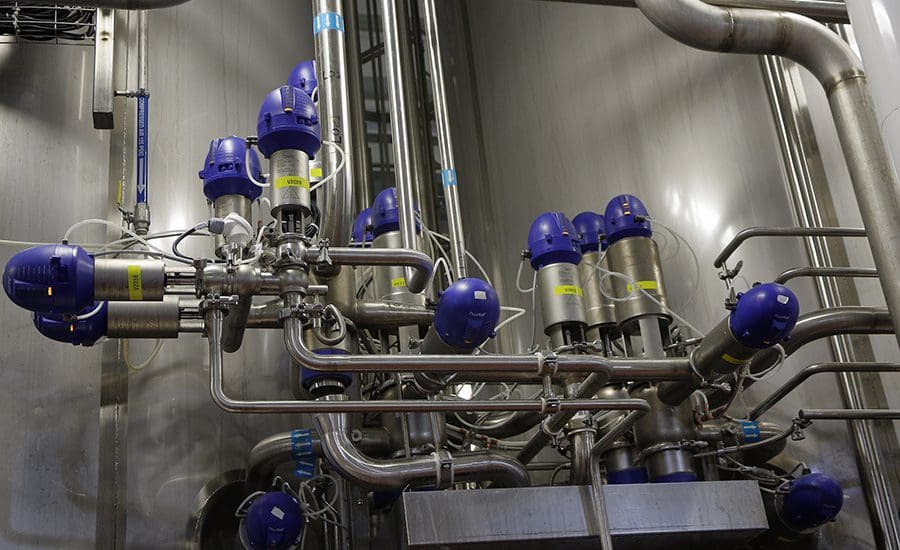
In the same way you use automation to make consistent, quality products, why not use CIP to ensure germ-free cleaning every time? You’ve automated your process and packaging and have computer-generated paper trails to show food safety and quality throughout your facility. Why wouldn’t you do the same with cleaning—wherever it’s practical? Granted, there are certain pieces of equipment you just have to take out of the process to clean manually, but for other components—like piping, some conveyor belting, certain pumps, mixers, tanks and other equipment—you can clean them in place (CIP) and have automated recordkeeping to show proof of cleaning and sanitation to regulating bodies when they ask. An Expert Opinion on Sanitation Safety in Food & Beverage Automation “CIP is an integral part of cleaning and sanitation, which affects the food safety of any facility. Cleaning and sanitation not only help you comply with regulatory requirements, but also protect consumers and your brand from contamination and recalls,” says Pablo Coronel, Ph.D., CRB Senior Fellow in Food Process & Food Safety. “CIP is carried out in process lines without dismantling and must reach every nook and cranny of the process equipment; thus, well-designed equipment that is amenable to CIP (as opposed to COP—clean out of place) is a must for any installation. Materials of construction, drainability, ease of cleaning, and prevention of dead areas/zones are some of the criteria for design,” adds Coronel. Besides the equipment design, a successful CIP system depends on several variables, such as water flow rate and temperature, chemicals used (concentration) and time of cleaning. These variables are set in cooperation with the chemical supplier by the characteristics of the product to be cleaned (viscosity, stickiness, amount of fouling and presence of allergens) and the equipment that needs to be cleaned. The presence of allergens, … Continued

Read More